Where is change
taking place?
Environmental conditions and their variation across space and time.
FOCUS AREAS
Six connected areas of work, from water and ecosystems to climate, economies and human well-being.
SPATIAL THINKING & INTELLIGENCE
Environmental conditions and their variation across space and time.
Flows of water, ecological processes and economic dependencies.
Exposure, vulnerability, health, livelihoods and capacity to adapt.
Environmental choices, their trade-offs and the evidence available.
Earth observation · GIScience · Spatial statistics · Environmental modelling · GeoAI · Economic analysis · Scenario assessment
01 / RESEARCH AREA
Research on water resources connects mountain catchments, groundwater, urban stormwater and environmental risk. Recent work examines nature-based water management and the spatial assessment of flood susceptibility in arid cities.
SELECTED PUBLISHED WORK
02 / RESEARCH AREA
This work considers the economic significance of environmental change, including investment in nature-based adaptation and the resource dependencies of climate and digital transitions. It connects environmental evidence with questions of finance, development and the distribution of benefits.
SELECTED PUBLISHED WORK
03 / RESEARCH AREA
Studies of disease risk and heat exposure bring public health into geographical analysis. They examine how environmental conditions, population characteristics and urban form can inform the identification of vulnerable places.
SELECTED PUBLISHED WORK
04 / RESEARCH AREA
This research examines how scientific evidence enters disaster-risk governance and how nature-based solutions can contribute to climate adaptation. Recent papers connect institutional arrangements, adaptation finance and decisions about resilience.
SELECTED PUBLISHED WORK
05 / RESEARCH AREA
Research on ecosystem services examines how changing landscapes affect the benefits people receive from nature. Recent studies address persistent mangrove establishment in the UAE and spatial differences in ecosystem services across Mongolia.
SELECTED PUBLISHED WORK
06 / RESEARCH AREA
Work in the UAE and Japan examines how urban landscapes contribute to water retention, water quality and recreation. The studies connect nature-based planning with the spatial balance between ecosystem-service supply and demand.
SELECTED PUBLISHED WORK
APPLICATIONS
Observations and analysis become useful through a clear understanding of the place, the question and the decision.
Satellite observations, air-quality forecasts and geographical context brought together with clear interpretation and communication of uncertainty.
Explore ResearchWatch ↗Studies of urban greening, stormwater and ecosystem services examine how landscapes contribute to water retention, water quality and recreation.
Read selected studies ↗Reproducible Python and Jupyter workflows, remote-sensing and GIS methods, and practical learning materials shared through seminars and workshops.
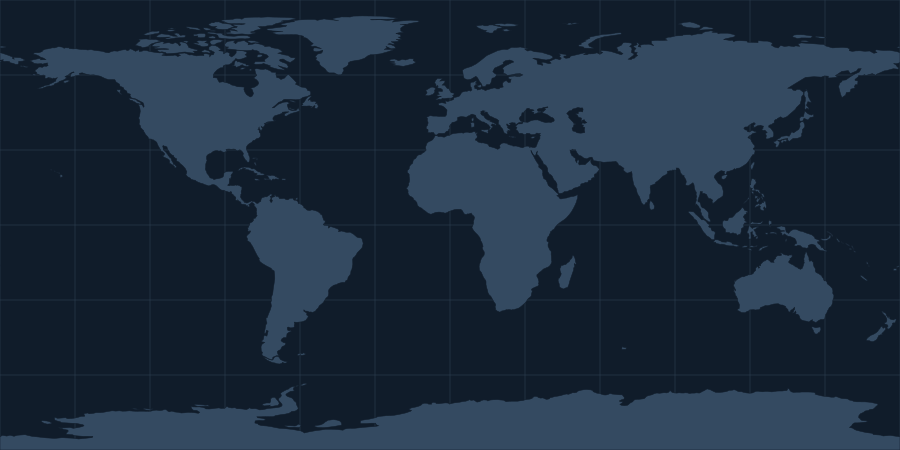
Speaking and teaching ↗THE GEOGRAPHY OF THE WORK
Published studies, professional experience, speaking and institutional connections, brought together through place.
Open the research atlas