COASTAL ECOSYSTEMS
Mangroves at the desert’s edge: what successful restoration requires
Along the shores of the Red Sea and the Arabian/Persian Gulf, mangroves grow under conditions that place considerable demands on plant life. Rainfall is scarce, summer temperatures are high, and evaporation leaves coastal waters increasingly salty. Many of these forests remain low and scattered. Yet they support young fish and crabs, help stabilize shorelines, and store carbon in their vegetation and soils.
These forests were the focus of our review published in Frontiers in Marine Science. We brought together research on their ecology, carbon storage, climate risks and management to examine what keeps them functioning and what their restoration requires. A central finding was that expectations need to reflect the environmental conditions of the region.
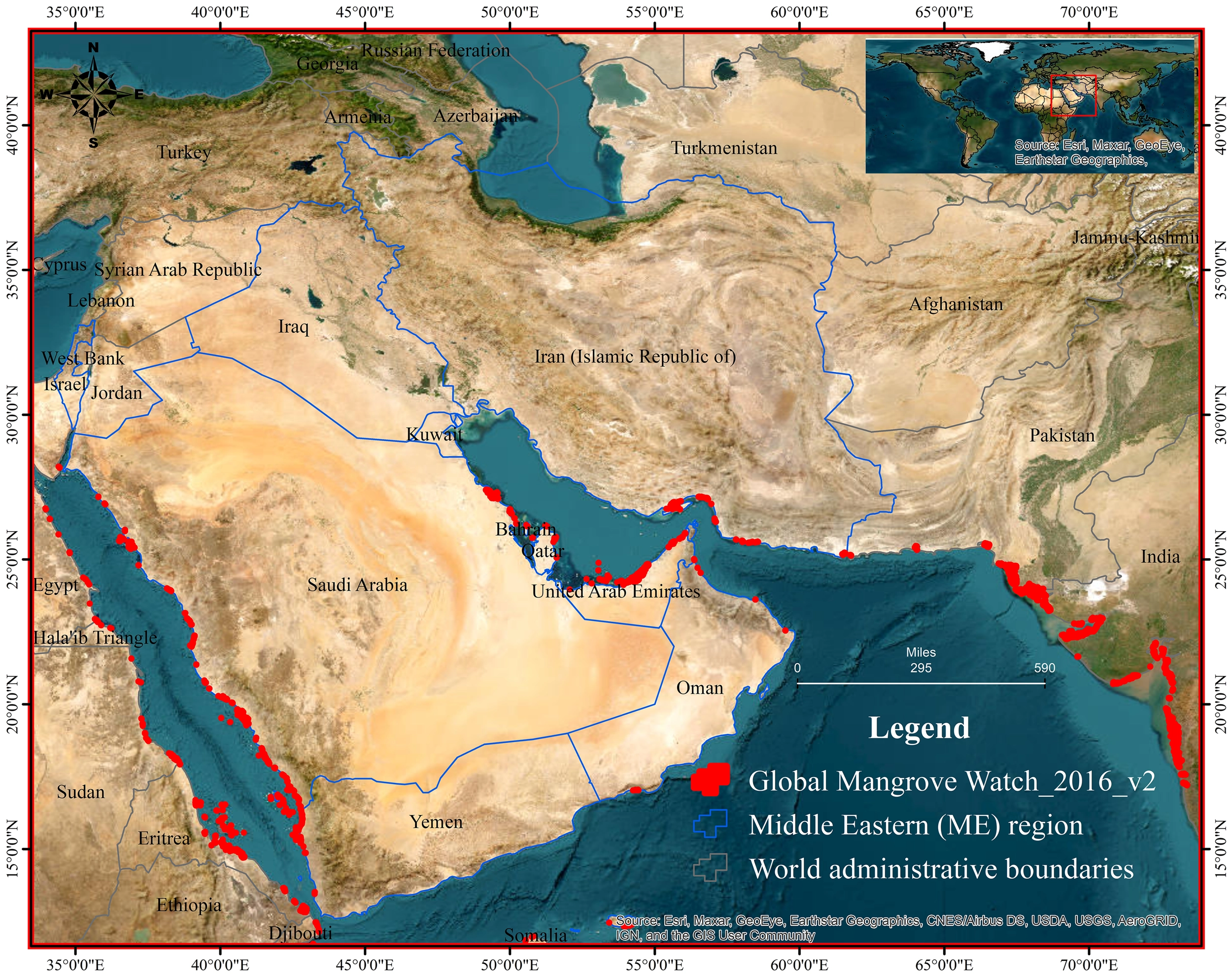
Mangroves around the Red Sea, the Gulf and adjoining coasts. Red areas show the Global Mangrove Watch 2016 distribution, enlarged for visibility.
Figure 1 from Meraj et al. (2025), Frontiers in Marine Science. Reproduced unchanged under CC BY 4.0. View full sizeThe grey mangrove, Avicennia marina, dominates much of this landscape. Its ability to tolerate salt and heat allows it to survive where many other trees cannot. Survival, however, comes with demands on growth. Limited nutrients and freshwater constrain productivity, and substantial resources are allocated to roots. The appearance of these forests therefore needs to be understood in relation to their surroundings.
Water is central to this relationship. Groundwater seepage and occasional freshwater flows can reduce salt stress. Tidal exchange helps prevent excessive salt accumulation, while sheltered bays and channels provide places where seedlings can establish. Differences in these conditions help explain why mangroves grow well in some coastal pockets and struggle in others.
For restoration, this makes site selection a practical starting point. Before planting, we need to understand how water enters and leaves a site, whether the ground is suitable, how exposed the shoreline is, and whether seedlings can establish there. Locally sourced planting material should be suited to the conditions it will encounter. Where water circulation has been disrupted, understanding that disruption becomes part of the restoration work.
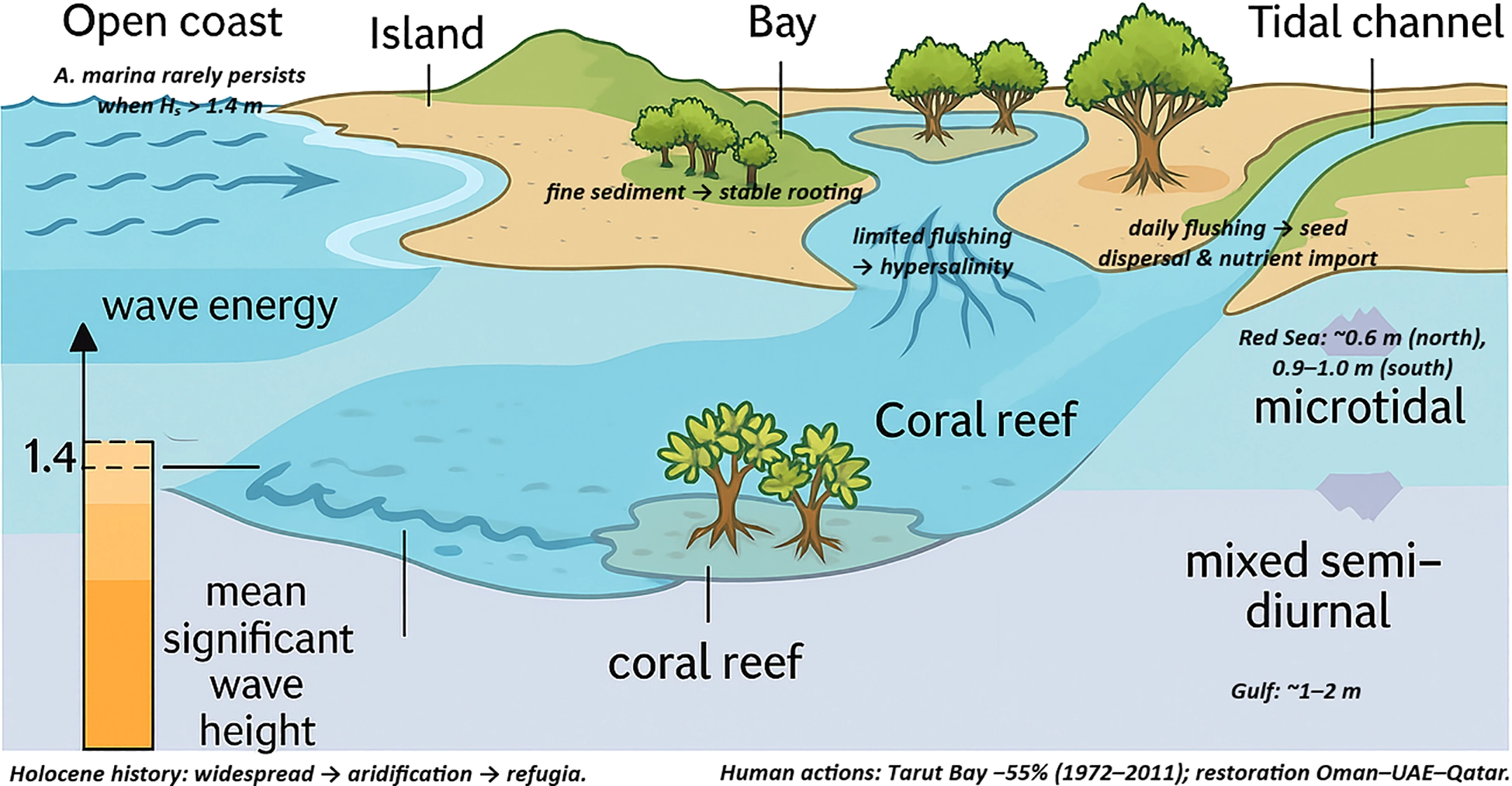
Sheltered bays, suitable sediment and tidal exchange help seedlings establish. The shape of the coast and the movement of water can make neighbouring sites very different.
Figure 3 from Meraj et al. (2025), Frontiers in Marine Science. Reproduced unchanged under CC BY 4.0. View full sizeThe surrounding coastline also matters. As sea level rises, mangrove habitat may shift inland where suitable ground remains available. Roads, seawalls and coastal development can restrict this adjustment. A forest’s future can therefore depend on decisions made beyond the boundary of a planting project. Keeping suitable space available and maintaining the water flows that sustain existing stands are important parts of long-term coastal planning.
Carbon brings another reason to take local conditions seriously. “Blue carbon” refers to carbon stored by coastal and marine ecosystems, including mangroves. Much of the interest in mangrove restoration now comes from their potential contribution to climate mitigation. Our review showed that organic carbon accumulation in arid mangroves is generally slower than in wetter tropical settings. Estimates based on global averages can consequently create expectations that local forests may not fulfil.
Existing carbon stores also deserve attention. Carbon can remain buried in undisturbed mangrove soils for long periods. Disturbing those soils can expose organic material to decomposition and release carbon dioxide. Protecting established forests therefore has an important place alongside carefully selected restoration projects.
Reliable measurement helps connect these ecological processes with climate commitments. Satellite images can show changes in forest cover, while field measurements provide information about vegetation and soil carbon. Repeated observations help establish whether a restored area is surviving, growing and maintaining its functions. These are the outcomes that should guide assessments of progress.
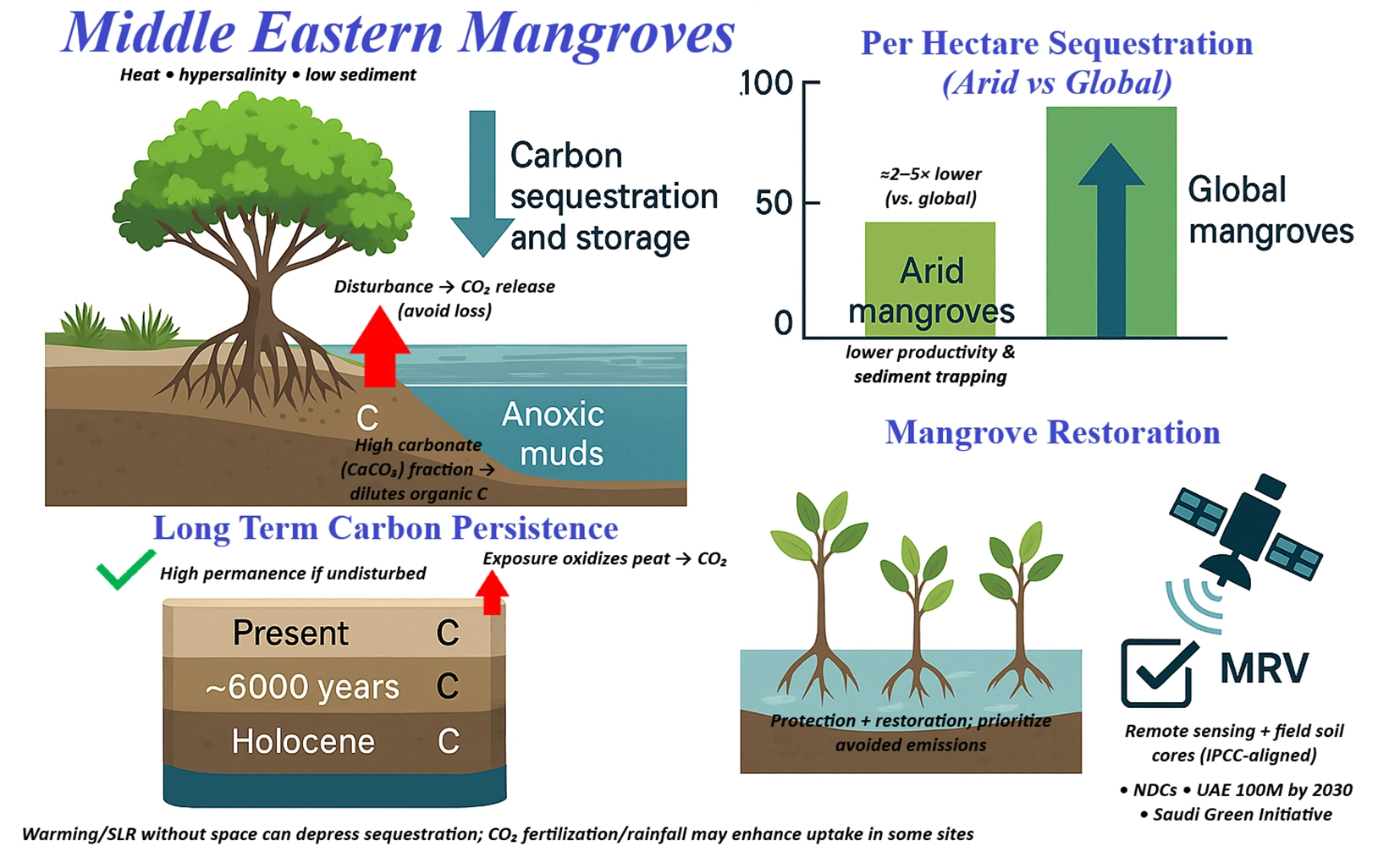
Conceptual summary of blue carbon in arid mangroves: slower carbon accumulation, long-lived soil stores, and the role of protection, restoration and monitoring.
Figure 8 from Meraj et al. (2025), Frontiers in Marine Science. Reproduced unchanged under CC BY 4.0. View full sizeThe benefits extend beyond carbon. Mangroves provide nursery habitat, contribute to shoreline stability, and offer places for recreation and environmental education. Coastal communities are connected to these benefits through fishing, local knowledge and everyday use. Their participation can help shape restoration priorities and sustain care after the initial planting work ends.
Our review also highlighted the importance of continuing maintenance, coordinated management and effective protection from pollution and damaging development. Funding needs to support this continuing work, including monitoring and community participation.
For me, the strongest implication is that mangrove restoration begins with understanding the coast. Water, sediment, shelter and space determine what a site can sustain. Planning around those conditions gives restoration a firmer ecological basis and helps ensure that its benefits endure.
← All insights